How the farm works

Restoration is not monoculture in reverse. Different land requires different approaches.

Fazenda ALUME is divided into five functional zones—each with its own strategy, monitoring protocol, and relationship between ecological recovery and productive use.

How the farm works

Five Functional Zones

Zone 1

01

Rubber Transition

The former monoculture area. Rubber trees are removed in sequences—not all at once—to avoid abrupt soil exposure. Native pioneer species go in immediately behind the removals to stabilise soil, begin succession, and close the canopy gap. This zone generates the most visible transformation on the farm.

Zone 2

02

Agroforestry Systems

Native Atlantic Forest species are planted alongside food, shade, and medicinal crops in stratified layers. This zone produces agricultural income while accelerating ecological recovery. As the soil biome rebuilds, managed systems gradually transition toward autonomous regenerating forest. This is where Tree Planting sponsorships are implemented—every sponsored tree is planted here, GPS-registered, and monitored.

6,000+ m² of agroforestry implemented80+ species in the ground

Zone 3

03

Secondary Forest Recovery

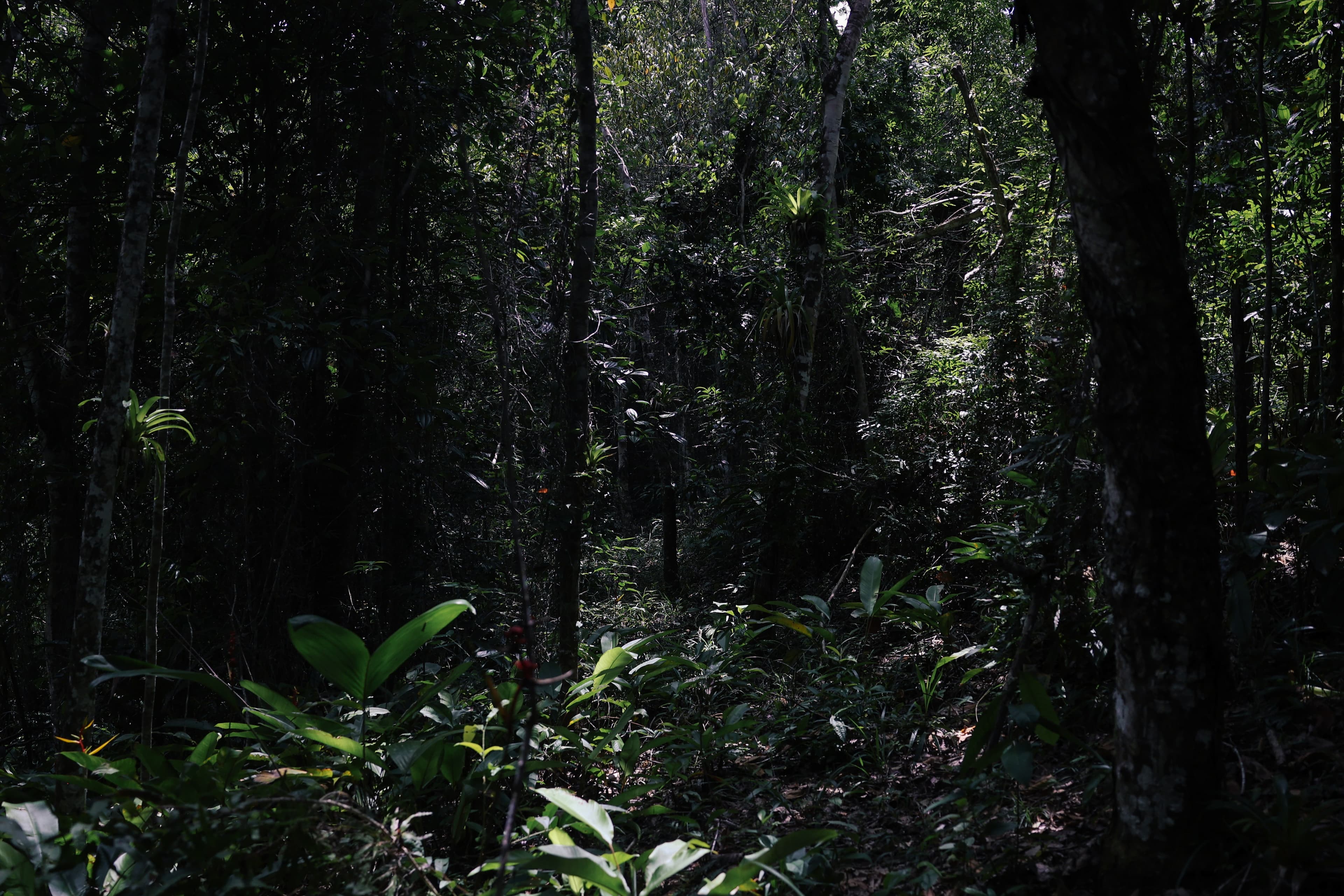
Existing secondary forest is left to regenerate with targeted interventions—invasive species removal, fauna habitat features, and succession monitoring. This zone is the baseline against which all restoration is measured. It shows what the land does when left to recover with minimal interference.

Zone 4

04

Research Plots

Defined areas support controlled trials, including soil biology experiments, species performance comparisons, and hydrological monitoring. Data from this zone feeds ALUME’s open-source restoration methodology and supports university and scientific collaboration.

Zone 5

05

Cultural & Infrastructure Area

The area around ALUME brings together gardens, medicinal beds, and the built environment. It is where ecological function and human presence meet, serving the residency programme, educational visits, and community workshops.