Circular Materials · Applied Research · Open Knowledge
Turn local waste into local infrastructure.
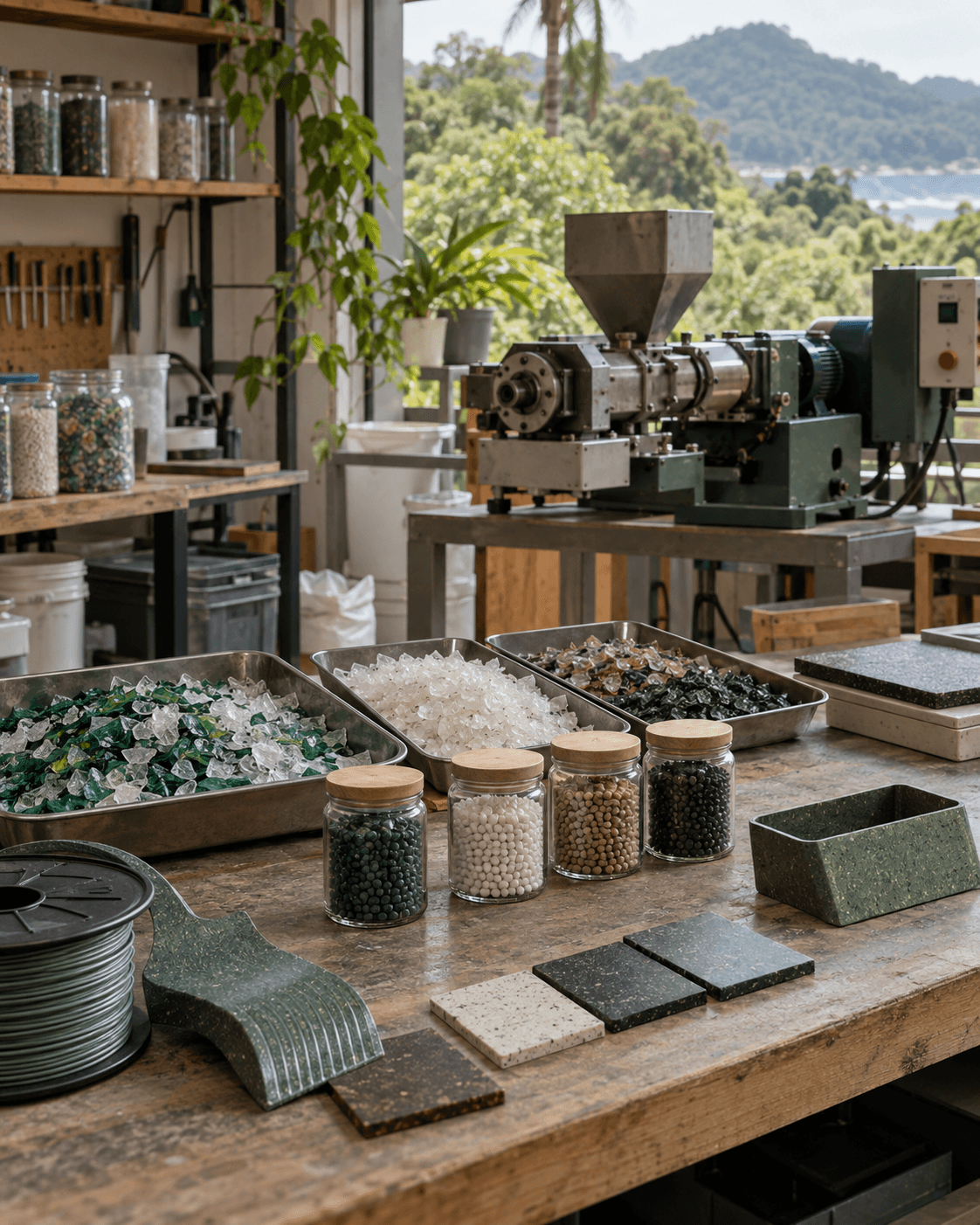
AMI³ - ALUME Major Impact - is an applied research initiative turning locally recovered waste into new materials, products, and infrastructure while developing an open and replicable model for circular manufacturing in Brazil.
Why AMI³
The same material causing pollution could become part of the solution.
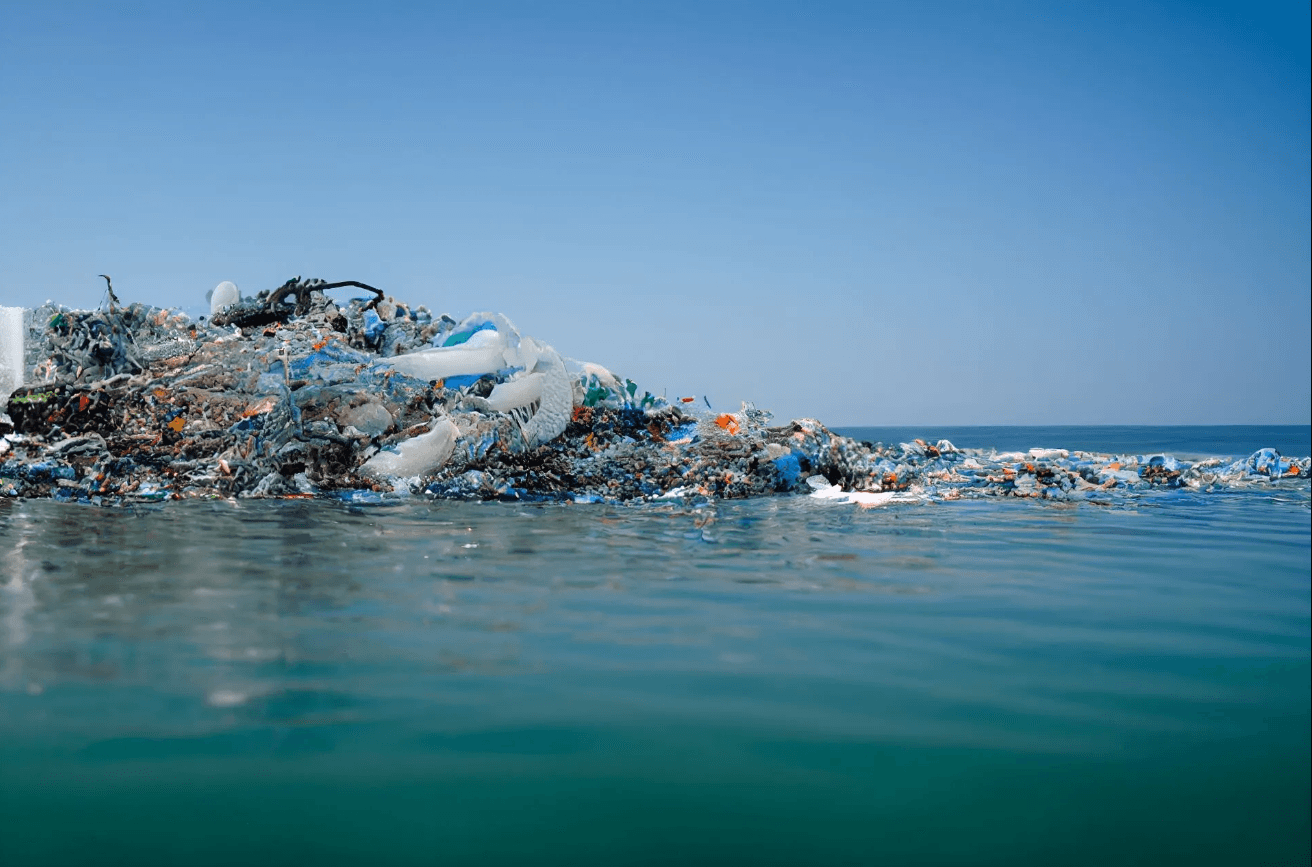
Millions of tonnes of plastic are discarded every year while many communities still lack durable roads, affordable housing, water infrastructure, crisis shelters, waste systems, and resilient public spaces.
Most upcycling creates small products. AMI³ focuses on large-scale, long-life applications that can absorb significant volumes of plastic and lock them into useful infrastructure.
AMI³ starts with a simple question:
What if these challenges could help solve one another?
Rather than treating waste as something to dispose of, we see it as a misplaced resource that can be redesigned into new productive cycles supporting both people and ecosystems.
Why Now
Brazil's circular economy is entering a new phase.
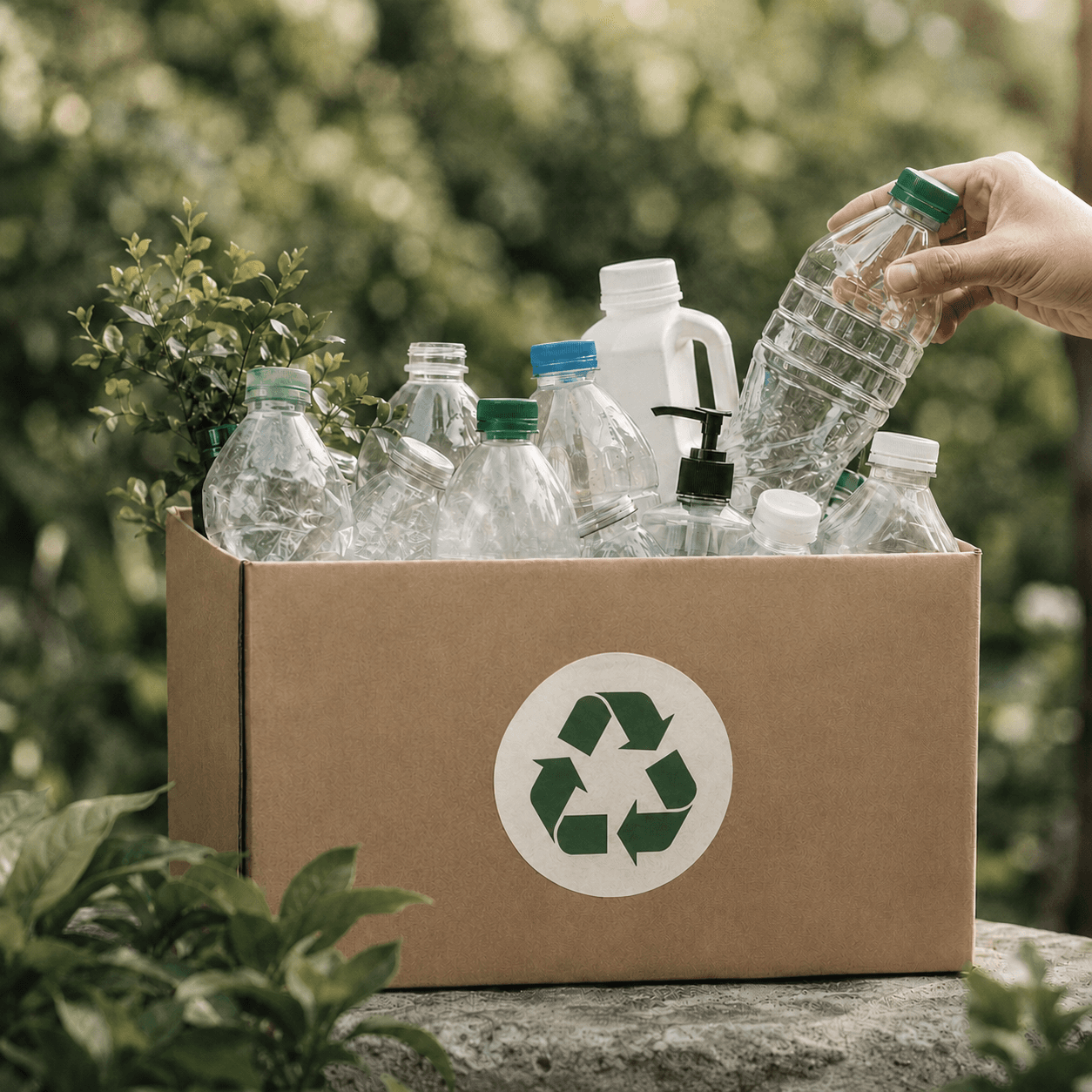
Brazil is not starting from zero. The country already has established mechanical recycling routes, specialized processors and value chains for materials such as PET.
The next challenge is to connect traceable material flows with viable processing, reliable end markets and applications that keep materials circulating for longer.
AMI³ focuses on the gaps between these systems — and recognizes when an established recycling route is already the more responsible choice.
Post-consumer plastic waste generated
2024 · latest national recycling year-base
Mechanical recycling rate
Brazil · 2024
Recycled resin used by construction and infrastructure
Brazil · 2024
Packaging recovery / recycled-content targets
Federal Decree 12,688/2025
Sources: ABIPLAST, Movimento Plástico Transforma and MaxiQuim; Brazilian Federal Decree 12,688/2025.
The AMI³ Model
Start with the material, the territory and the need.
AMI³ reverses the machine-first approach. Before selecting equipment or promising a product, the model studies what material exists, how it behaves, where it already has value and which applications the territory actually needs.
01
Recover
Connect field collection and existing local waste streams with a traceable material flow.
02
Understand
Weigh, classify and characterize materials while mapping origin, contamination and existing value chains.
03
Select
Compare available pathways and choose the most responsible technical route for each material and intended use.
04
Transform
Process materials through appropriate methods such as shredding, drying, extrusion, pressing, molding or additive manufacturing.
05
Test
Evaluate material performance, process stability, durability, energy requirements, cost and environmental compatibility.
06
Apply
Develop useful products and components that respond to real territorial needs rather than making objects simply because they are possible.
07
Replicate
Document validated methods, results and limitations so the model can be adapted elsewhere.
The First Pilot
From hypothesis to evidence.
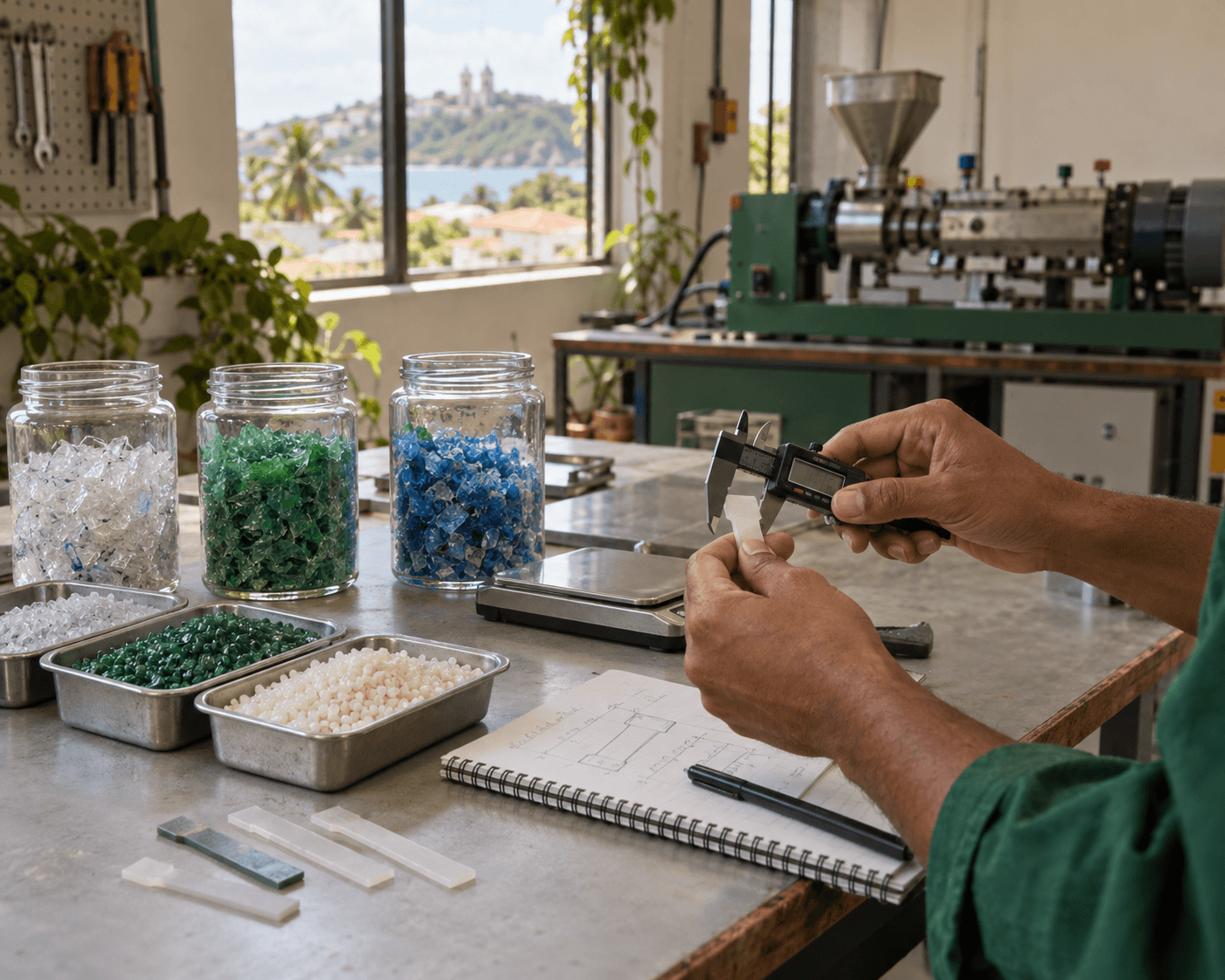
The first AMI³ framework is designed as a 12-month applied research cycle in southern Bahia.
It is not a promise to install a full industrial facility immediately. It is a structured process for reducing technical, environmental and commercial uncertainty before major infrastructure decisions are made.
Its objective is to generate the evidence required to define the future architecture of an AMI³ Center: materials, processes, equipment, applications, partnerships and scale.
- 01
Territorial Diagnosis
Map material flows, local needs, actors, logistics, existing recycling routes and the conditions that shape a viable pilot.
- 02
Collection & Characterization
Recover, weigh, sort and characterize selected materials while documenting origin, contamination and variability.
- 03
Processing Trials
Compare suitable preparation and transformation pathways at research scale, without assuming one process fits every material.
- 04
Material & Prototype Testing
Produce test coupons and limited prototypes to evaluate process stability, performance, durability and appropriate applications.
- 05
Feasibility Assessment
Examine technical, environmental, economic and territorial evidence together, including logistics, energy, cost and realistic demand.
- 06
Executive & Replication Plan
Translate findings into a decision-ready architecture for the future AMI³ Center and a documented method for future territorial adaptation.
The pilot is designed to answer a practical question:
“What should be built here — and what evidence justifies building it?”
The outcome should be a decision-ready model, not simply a collection of prototypes.
Research Priorities
Use the right technology for the right material.
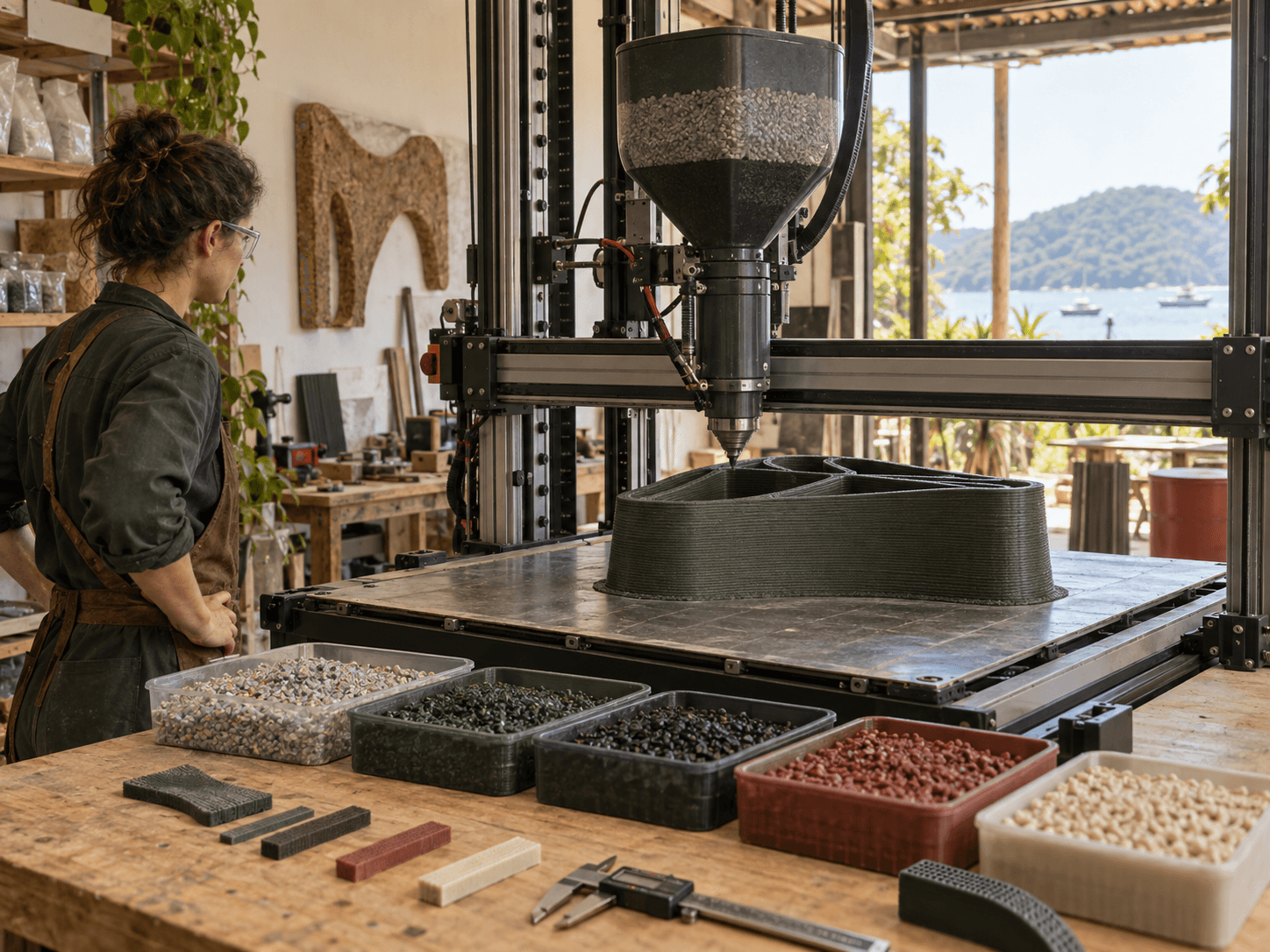
Large-format 3D printing is one tool within AMI³, not the definition of the project. Research must compare complete material pathways — from recovery and preparation to processing, application, performance and end of life.
Material Recovery & Processing
Sorting, washing, drying, shredding, granulation, extrusion and compounding for technically appropriate streams such as PET, HDPE, PP and LDPE/LLDPE. Materials are evaluated separately; not every stream is recyclable or suitable for local transformation.
Circular Manufacturing
Extrusion, sheet pressing, compression or injection molding, pellet- or filament-based additive manufacturing, large-format printing and hybrid processes. The technology is selected by evidence, not by visual novelty.
Performance & Applied Research
Mechanical behavior, processing consistency, weathering, moisture, UV exposure, dimensional stability, repairability, recyclability, energy requirements, lifecycle considerations and techno-economic feasibility.
Evidence Before Scale
Measure the system, not just the waste.
Tonnes recovered are only one part of the evidence. AMI³ must test material performance, environmental implications, economics and territorial value together before deciding what deserves to scale.
Material & Engineering
- Recovery yield
- Contamination
- Processing loss
- Recycled content
- Mechanical performance
- Repeatability
- Durability
- Weathering
- End-of-life recoverability
Environmental
- Leakage prevention
- Energy per kilogram
- Transport distance
- Expected lifetime
- Material efficiency
- Recyclability
- Avoided burden
Economic
- Processing cost per kilogram
- Equipment requirements
- CAPEX and OPEX
- Energy cost
- Labour
- Product value
- Demand
- Logistics
- Commercial viability
Territorial
- Participation
- Cooperative integration
- Skills developed
- Potential jobs
- Income retained locally
- Local demand
- Reduced unnecessary transport
- Replicability
Open Knowledge
Prototype locally. Document openly. Replicate intelligently.
Circular systems are territory-specific. Materials, logistics, infrastructure, skills, demand and environmental conditions vary from place to place.
AMI³ is therefore not designed as a universal factory copied without context. It is a rigorous method that can be tested locally, documented clearly and adapted responsibly.
Open Knowledge by Design
Where appropriate, AMI³ aims to publish both successes and failures. Potential outputs include material data, test results, processing parameters, research methods, collection protocols, selected fabrication files, technical lessons and practical guides.
Publication will remain compatible with safety requirements, regulation and third-party intellectual property. Open knowledge is a working principle, not a blanket claim that every output will be open source.
- Local Territory
- Material Flows
- Research & Validation
- Local Applications
- Measured Results
- Documented Model
- Adaptation to Other Territories
Continuous Learning
Evidence from the documented model returns to research and validation before the next adaptation.
Partnerships
Build the evidence. Then build the infrastructure.
AMI³ is multidisciplinary by design. The most valuable partnerships are those that strengthen research, testing, processing, territorial implementation and the development of a viable pilot.
Research & Technical Partners
Help design characterization protocols, testing methods, material pathways, lifecycle studies and evidence standards.
Industry & Technology Partners
Contribute processing expertise, equipment access, material knowledge, manufacturing capacity or application development.
Territorial Partners
Connect material flows, local knowledge, collection networks, cooperatives and real needs to a place-based pilot.
Funding Partners
Fund the research, testing and planning required to reduce risk before equipment and infrastructure are scaled.
From recovered material to tested solution.
Help us determine what works, what does not, and what is worth scaling.