A 30-year territorial intention.
We are not building a project; we are building an institution designed to outlast its founders.
About ALUME Institute
Regenerate ecosystems and restore the relationship between people and nature by researching, testing, and implementing bold, non-linear solutions to the planet's most urgent challenges.
Fazenda ALUME in Aderno, Ilhéus, Bahia, Brazil — CNPJ 62.173.080/0001-34
We research, test, and implement bold, non-linear solutions to the most urgent ecological and social challenges on Earth: deforestation, monocultures, pollution that create cumulative damage across global ecosystems; the unequal distribution of economic value and the chronic undervaluation of rural communities; and the growing disconnection between people and the living systems we depend on.
We restore degraded lands through agroforestry, regenerating soil and rebuilding diversity of ecosystems. These territories are protected through long-term land stewardship and expanded into connected green corridors that support biodiversity while integrating human presence in a balanced and protective way.
We design and develop strategic infrastructure that supports cultural, educational, and community transformation through residencies, artistic exchange, and regenerative programs connecting local and global knowledge.
We strive to strengthen local bioeconomies by providing access to value-added agro-industrial technologies — including supercritical CO₂ extraction — enabling producers to move beyond raw materials and participate in higher-value markets.
We intend to develop laboratories dedicated to scientific research in the field of biological health, focusing on both human and soil microbiomes.
We are designing a methodology and operational system for a scalable upcycling model that transforms waste, particularly plastic, into functional community infrastructure through technologies such as pyrolysis, material granulation, digital modeling, LiDAR, and large-scale 3D printing, reducing environmental pollution while improving quality of life in rural and underserved areas.
We recognize that ecological restoration and community well-being are inseparable. Our approach is integral: ecology, science, technology, art, health, and community engagement are not separate programs, but different expressions of the same act — sustained attention to living systems and responsible action within them.
We believe this integration is what restoration has been missing, and what ALUME is designed to provide. Scaling ecosystem regeneration through science, technology, and community.
Our commitments from day one
Promises made before there are results to protect—and designed to become harder to walk back as ALUME grows.
We are not building a project; we are building an institution designed to outlast its founders.
The land and its regeneration remain protected from short-term extraction and speculation.
Every protocol, monitoring tool, and regenerative model we develop will be made freely available.
We count only what is planted, certify only what is measured, and report only what is independently reviewable.
We envision a future where ecosystem regeneration is no longer an isolated environmental effort, but the foundation of cultural, economic, scientific, and community life. A world where forests, soils, water systems, and human communities recover together through systems designed for long-term balance rather than short-term extraction. We see degraded territories transformed into living ecological corridors where biodiversity can return, water cycles stabilize, soil microbiomes regenerate, and human presence becomes part of the protection and continuity of the ecosystem rather than its destruction.
We see restoration becoming economically viable, culturally embedded, scientifically grounded, and accessible to the communities most connected to the land. We envision rural communities participating fully in regenerative economies — not as undervalued suppliers of raw materials, but as active holders of knowledge, technology, production capacity, and stewardship. We see local bioeconomies strengthened through agroforestry, scientific research, value-added processing, and open access to regenerative technologies.
We see art, education, and cultural exchange making ecological restoration emotionally visible and socially meaningful. Artists, researchers, students, producers, and communities become part of the same regenerative process — transforming restoration from a technical intervention into a shared cultural movement. We envision scientific laboratories and field-based research contributing to the understanding of ecosystem health, microbiomes, biodiversity, and regenerative methodologies, while integrating traditional and local knowledge as an essential part of scientific development rather than as something separate from it.
We see waste transformed into infrastructure, materials, and practical community solutions through scalable upcycling systems that reduce environmental pressure while improving quality of life in rural and underserved areas. We envision ALUME’s methodologies, technologies, and regenerative models operating as open-source frameworks that can be freely adapted, replicated, and improved by other communities, organizations, and territories around the world. Our long-term vision is not to create dependence on a single institution, but to help establish self-sustaining regenerative systems capable of continuing beyond us — ecosystems that no longer require constant intervention to remain alive, protected, and interconnected.
Regenerating a forest is not simply about planting trees. It is about restoring ecological relationships, rebuilding biodiversity, strengthening local livelihoods, and creating conditions that allow nature to continue recovering long after intervention ends. Our Theory of Change explains how these elements connect at Fazenda ALUME, translating a long-term vision into measurable actions and outcomes.
Decades of rubber monoculture transformed much of this landscape into a simplified ecosystem with far lower ecological value than the Atlantic Forest it replaced. Today, around half of Fazenda ALUME remains under rubber plantation, while the other half is secondary forest in natural regeneration. Although recovery has begun, ecological processes including soil health, fungal networks, habitat complexity, and natural species recruitment remain limited by the legacy of intensive land use.
By 2035, Fazenda ALUME will have transitioned beyond monoculture into a thriving regenerative landscape. Forest will be expanding across multiple stages of succession, while the protected territory will have grown to at least three times its current size through our Standing Forest initiative.
Regeneration will be supported by a resilient local economy. Through the BioEconomy Hub, native forest products such as cacao, açaí and other superfoods, adaptogenic and medicinal plants will be transformed into high-value products, creating livelihoods that depend on keeping the forest standing. Through AMI³, plastic collected by local communities will become a resource for circular manufacturing and fertilizers rather than pollution, generating income while reducing environmental impact.
This vision is already taking shape. Agroforestry, Standing Forest and Plant Exchange are underway today, while the Artistic Residency and BioEconomy Hub are moving from planning into implementation. Together, these initiatives create a model where ecological restoration, community prosperity, and economic resilience reinforce one another.
By 2055, ALUME aims to be one of the world’s leading regenerative institutions — financially resilient, scientifically respected, and capable of restoring ecosystems at scale.
What begins on ALUME Farm now will have evolved into a network of regional regenerative hubs operating across every major Brazilian biome, restoring the Atlantic Forest, Amazon, Cerrado, Caatinga, Pantanal, Pampa, and Coastal ecosystems. Building on this experience, ALUME will expand internationally, helping communities implement regenerative agriculture, agroforestry, ecosystem restoration, and nature-based economic models around the world.
As our capacity grows, so will our ability to empower others. ALUME will invest in, incubate, and accelerate regenerative initiatives through grants, philanthropic funding, impact investments, and long-term partnerships — supporting nonprofits, researchers, entrepreneurs, Indigenous communities, and local organizations working to regenerate landscapes and strengthen local economies.
Our ambition is not simply to restore forests. It is to demonstrate that regeneration can become a global economic force — one that makes ecosystems more valuable alive than degraded, enables communities to thrive alongside nature, and inspires a new generation of institutions built around restoring life on Earth.
Through syntropic agroforestry, ecological restoration, and long-term stewardship, we transform degraded land into resilient, biodiverse landscapes. Native and carefully selected productive species grow together, restoring soil health, increasing biodiversity, improving water cycles, and creating forests that become increasingly self-sustaining over time. At the same time, agroforestry generates food, timber, and forest products that provide income long before a mature forest is established.
Lasting restoration depends on people. Through educational programs, volunteer experiences, international exchange, research, and community workshops, we create opportunities for people to reconnect with nature — not as visitors, but as active participants in regeneration. This shared sense of ownership is what allows restoration to continue across generations.
Through initiatives such as the Artistic Residency, BioEconomy Hub, and AMI³, we create economic systems that increase the value of standing forests, reduce waste, and generate dignified livelihoods. By connecting restoration with circular economy and value-added production, conservation becomes an opportunity rather than a sacrifice.
Healthier ecosystems support stronger communities; stronger communities build resilient local economies; resilient economies generate the resources needed to restore even more ecosystems.
Each ALUME initiative advances the same Theory of Change.Together, they regenerate ecosystems, strengthen communities, and build a regenerative economy capable of sustaining restoration for generations.
| Project | Role in the system |
|---|---|
| Tree Planting | Restores degraded landscapes through syntropic agroforestry while generating income for local households and increasing biodiversity. |
| Standing Forest | Expands permanently protected landscapes by acquiring and safeguarding ecologically strategic land, creating larger and more connected habitats and green corridors. |
| Plastic Harvest | Removes plastic pollution while creating opportunities for local communities and supplying material for a circular economy. |
| BioEconomy Hub | Creates value from regenerative production by transforming forest products into high-value goods that reward keeping forests standing. |
| AMI³ | The upcycling centre with its own technology roadmap, converting waste into useful products and infrastructure and turning environmental challenges into local opportunity. |
| Artist Green Residency | Uses art, cultural and international exchange to inspire environmental awareness, creativity, and long-term engagement with regeneration. |
| Community Workshops | Shares practical knowledge while empowering local communities to become active leaders in ecological restoration. |
| Operation Safe Forest | Protects the conditions regeneration depends on through biodiversity monitoring, responsible stewardship, community dialogue, and landscape security. |
| Plant Exchange | Connects people, farms, schools, and restoration projects through the exchange and donation of plants, seedlings, seeds, and propagation material. |
| Volunteering | Brings people from around the world into the regeneration process, transforming participants into long-term ambassadors and stewards of nature. |
None of these initiatives succeeds in isolation.They form a regenerative system in which ecological restoration, education, culture, community, innovation, and sustainable enterprise continuously reinforce one another.
ALUME began with a simple idea: to help regenerate the relationship between people and nature. Before there was an institute, there was a desire to plant trees and create a living library of biodiversity. That vision led to the search for a place where regeneration could become a long-term commitment. That place became Fazenda ALUME, in Aderno, Aritaguá, Ilhéus, Bahia. As the work grew, so did the vision. What began as one regenerative landscape evolved into ALUME — Abundance of Life in Unity with Mother Earth: an institution dedicated to restoring ecosystems, empowering communities, and building practical models that can be replicated far beyond our own land.
The force that gives meaning to everything else: care, attentive observation, responsible action, and the commitment to protect what is fragile, alive, and interconnected. Love becomes real through action.
Conviction without structure produces noise, not results. We build governance, methodology, and measurement systems precisely because our intentions are too important to be disorganised.
To always improve. We are an institution entering a very old forest, and we intend to remain students of both.
To experiment, to question inherited models, to build differently. The forest evolves through constant change. So must we.
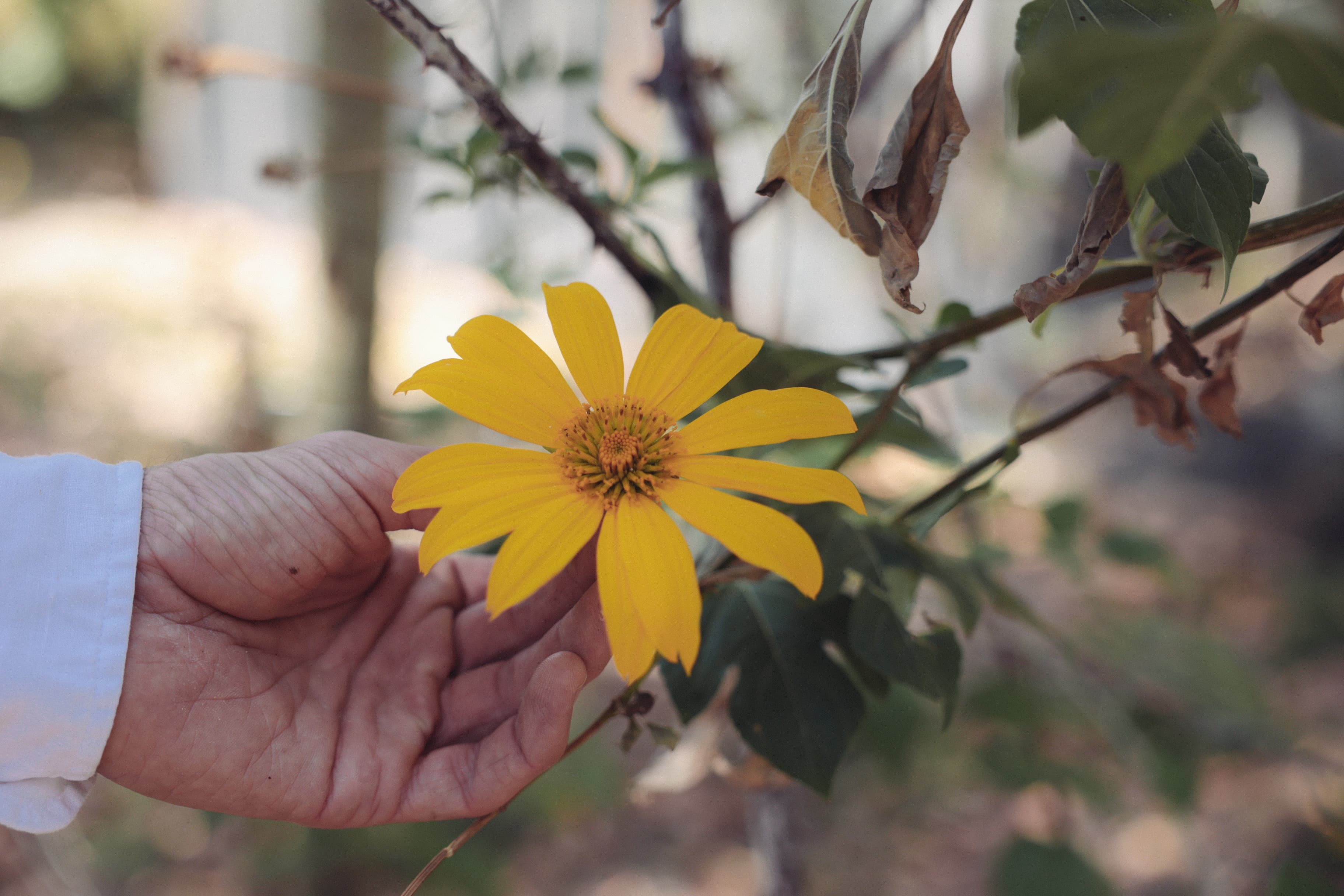
We restore forests instead of extracting them. We transform waste into resources, science into action, and culture into a force for regeneration — building living systems that benefit both people and nature.
The beliefs below are not our marketing positions, and they are not conclusions drawn from years of results. They are the convictions we are entering the work with: the assumptions we are betting on, the things we have decided we believe before the evidence is fully in. We write them down now so that we can be held to them — by our partners, by the communities we work with, and by ourselves — as the institution grows and the pressures to compromise accumulate.
Ecosystems need regeneration because of ignorance and the lack of care in our everyday decisions and ways of living. Simple ecological living and care for our foundation — the planet we depend on — has not yet become a collective intention: to care for and protect what surrounds us. At its core, this is a question of relationship — how do we relate to nature, to ourselves, to matter, to women, to the Mother, and to the living world around us. Regeneration begins with finding moderation, balance, and responsibility in the way we live and relate to all things. This conviction is what connects everything below.
Every degraded hectare is an invitation. Every monoculture is a question waiting for a different answer. Every community surviving at the edge of a forest is evidence that the current model of land use has failed — not people and not nature, but the logic that separated them.
ALUME was born in a specific place: a farm in Aritaguá, Ilhéus, Bahia, where rubber trees were planted in rows across land that once held one of the most complex ecosystems on Earth. We did not begin with a theory. We began with the land in front of us and the question of what it was asking to become.
That question is still the center of everything we do.
Fazenda ALUME — the territory where this experiment lives — will not be sold or subdivided. That commitment belongs to those who steward it. The intention is to move against the grain of land fragmentation: holding the territory together, expanding green corridors where possible, integrating surrounding communities into a living and growing ecosystem rather than shrinking it into a private reserve.
Land access — the right to grow food, to belong to a place, to live with dignity on it — is a human right that our era has systematically narrowed. We orient ourselves in the opposite direction.
The Institute’s role is not to own land. It is to build the institutional structure, partnerships, and methodologies that make regeneration of land like this viable, replicable, and financially sustainable — so that what works in Aderno can be adopted by any community, producer, or landowner in Bahia who wants to do the same.
The mateiros who know which plant signals water underground, the farmers who read soil by its smell, the communities who have lived inside these forests for generations — their knowledge is not folklore. It is data that no satellite can collect. ALUME is built on the commitment to take both ways of knowing seriously and let them strengthen each other.
All methodologies, monitoring tools, and regenerative models developed through our work will be made open source. Knowledge that helps forests grow should not be locked behind intellectual property. It belongs to everyone who needs it.
Preservation models that fence people away from nature in the name of protecting it have failed — ecologically, socially, and morally. ALUME is not a nature reserve. It is a working territory where humans are part of the system: planting, harvesting, learning, building, resting, and contributing to ecological function rather than extracting from it.
We are building, at small scale, a model of what a future ecological community can look like — one that has food sovereignty, local culture, education, healthcare, meaningful work, and wildness, all at the same address. Not a utopia. A prototype.
We work with companies. We design products for them, issue them certificates, give them access to our science and our land. We do this because corporate capital, directed well, can accelerate restoration at a pace that no grant program or volunteer effort can match alone.
But we do not offer greenwashing. We do not sell the appearance of impact. Every tree we count is planted. Every carbon estimate is conservative and documented. Every partner who puts their name on our work is accountable to what it actually produces.
We refuse to participate in movements — corporate or otherwise — that are separative, extractive, or manipulative. We do not take money from entities whose core activity contradicts what we are building. We would rather be smaller and honest than larger and compromised.
ALUME means: Abundance of Life in Unity with Mother Earth.
We believe life grows through connection. Through the diversity of species, relationships, ideas, seeds, knowledge, and possibilities.
Like a forest, we are not one tree — we are a living community, growing together, supporting one another, creating conditions for more life to flourish.
We are cultivating a place where diversity becomes strength, where knowledge becomes wisdom, and where every seed carries the possibility of a new future.
Our symbol is a vessel of love — a reminder that represents our purpose: to receive the gifts of Earth with gratitude and share them with generosity.
We are here to nurture, regenerate, and return abundance to the world. Together, we create more life, more connection, and more abundance.
Repairing ecosystems and advancing environmental science require scientific integrity and public accountability. ALUME is building a public record of its institutional, financial, legal, and operational structures in line with applicable Brazilian governance, privacy, anti-corruption, and civil-society frameworks.
Founding Documents
Records that establish the Institute’s legal identity, governance, and current representation.
Policies & Integrity
Policies that guide ethics, privacy, responsible operations, and institutional integrity.
Compliance Programme & Code of Ethics
Privacy & Data Protection Policy
Conflict of Interest Policy
Civil Society Framework
Activity, financial, audit, and partnership records published as they become available.
Annual Activity & Impact Report
Audited Financial Statements
Public Grants & Partnership Agreements
The future is shaped by the choices we make today. Join us in restoring ecosystems, empowering communities, and building practical models that help nature and people flourish together. Whether you are an individual, a school, a company, a researcher, or a foundation, there is a place for you in this work. Be welcome!